

The Search Behind the Scenes: How Young Media Professionals Find Industry Resources
The media and entertainment industry employs over 1.3 million people in Europe alone. Yet finding the right production facility as a young professional can feel like navigating a maze with no map. The resources exist. The spaces exist. But for someone just starting out, knowing where to look, what to search for, and who to trust is a challenge that rarely gets talked about. Most platforms and providers assume their audience will simply find them. Regardless, there is still this invisible search behavior that tends to get pverlooked and taken for granted.
Where AVENUE Comes in in This Problem
AVENUE is a European project with multiple ecosystems spread across Europe. Cradle is responsible party for the Virtual Production (VP) ecosystem that is located at Breda University of Applied Sciences, offering young media professionals’ access to an on-campus XR stage alongside a mentoring system to support their development in content creation and innovation.
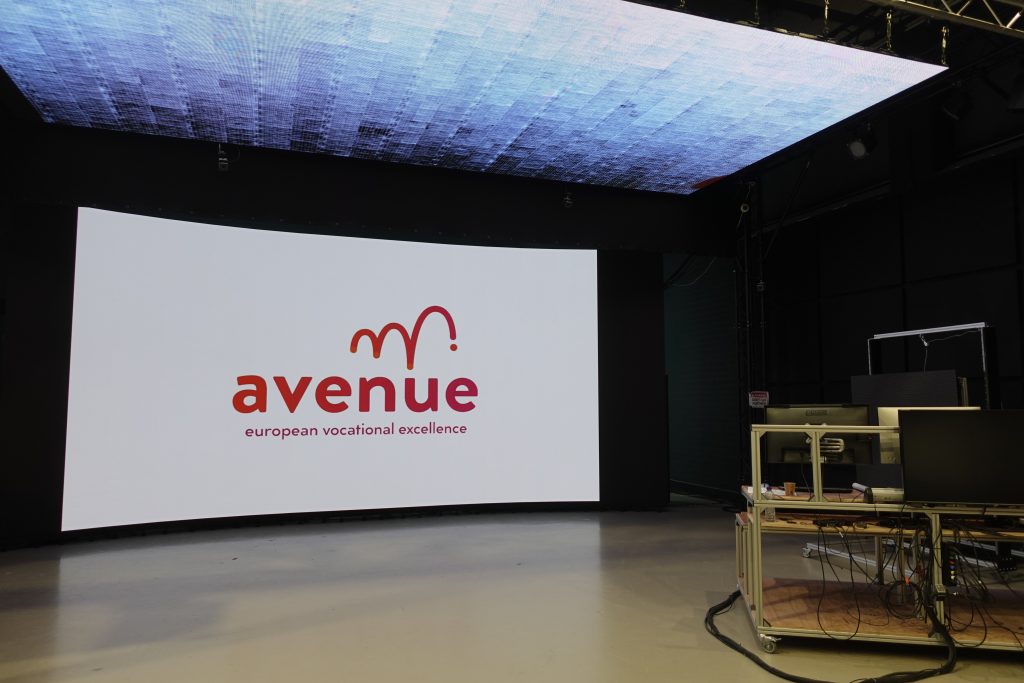
The technology is there. The space is there. The problem? Getting the word out to the people who need it most. The instinct might be to reach for the usual marketing toolkit, run some ads, post on Instagram, maybe boost a few reels. But before jumping to solutions, it seemed worth asking a more fundamental question: how do young media professionals actually look for resources like this in the first place? That question became the basis for this research.
Information-Seeking Behavior
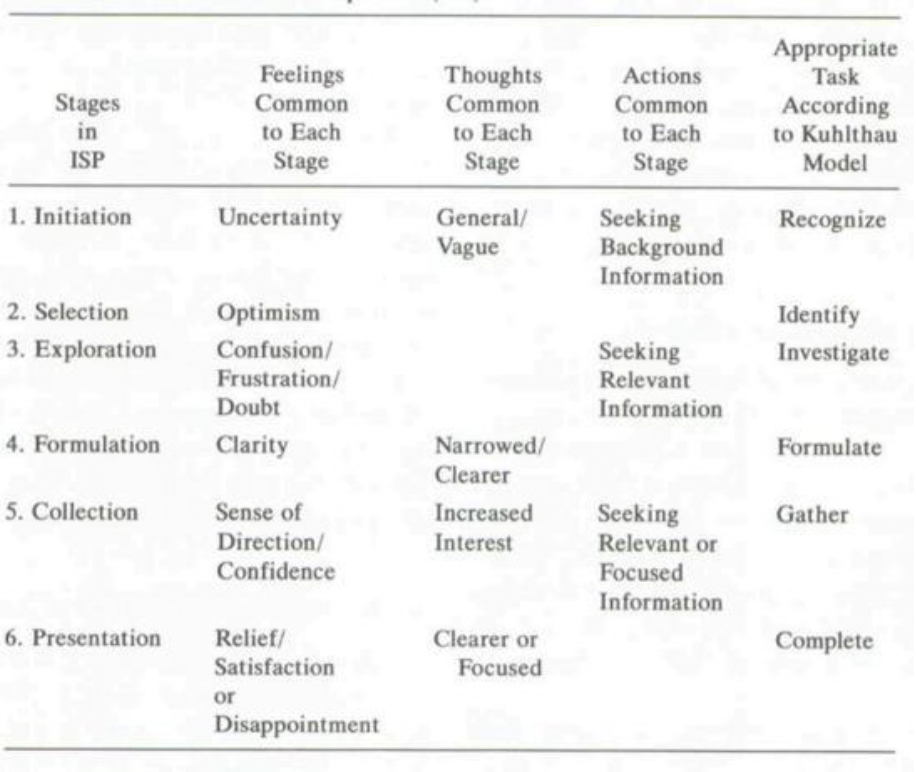
Information-seeking behavior has been studied for decades. However, no clear link was proven to exist between the theory and the precise contextual framework that AVENUE presents. There are plenty of models that can help shape the information-seeking behavior of young media professionals, each with its own benefits and disadvantages. For this case, two models proved especially useful. Kuhlthau’s Information Search Process maps the emotional arc of a search. From the initial uncertainty and anxiety of not knowing where to start, through the overwhelm of too much information, to the relief of finally landing somewhere.
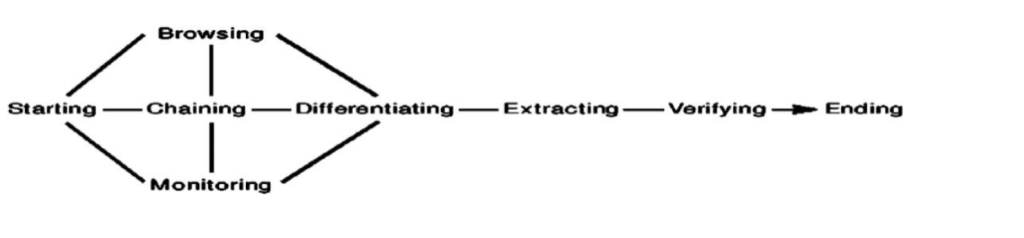
Ellis’s Behavioral Patterns Model, on the other hand, looks at the actions people take. Starting from familiar sources, chaining through references, browsing, verifying.
Together they paint a picture of searching as something that is both messy and emotional. Far from the clean, logical process we might imagine.
Together, and layered with research on barriers young professionals face and how Generation Z (repreentatives of young media professionals) navigates platforms and social media, these two models provide a full picture of the information-seeking process that we can expect. What did the actual outcome portray?
What the research actually found
Ten interviews with young media professionals between 20 and 27 years old painted a surprisingly consistent picture. The search almost always starts with people, not platforms. Peers, classmates, and industry contacts are the first port of call before anyone opens a browser. When the search does move online, Google comes first for broad orientation, followed by Instagram for a closer look at whether a space feels right. Paid content gets ignored almost universally, as participants actively skipped sponsored results and relied on organic source discovery. An outdated website or a quiet Instagram page, meanwhile, was enough to make someone move on entirely. Trust was highlighted as an important decision-making factor, built-up through a mix of signals such as university affiliation, peer reviews, and a consistently maintained online presence.
But the finding that stood out most was something no framework had a name for and simply put it would be gut feeling. Participants described checking a provider’s social channels not just for information, but for accessing weather the vibe/feeling they get from the place match their expectations. Did this place seem approachable? Did the people behind it seem friendly? Like one of the participants said: “Sometimes you just get a feeling about a place, and you go with it.”
Mapping it all out
Putting the findings against the theoretical models, a clearer picture of the journey emerged. It starts in networks, moves through platforms, gets filtered by credibility signals, and ends in a decision shaped as much by intuition as by logic.
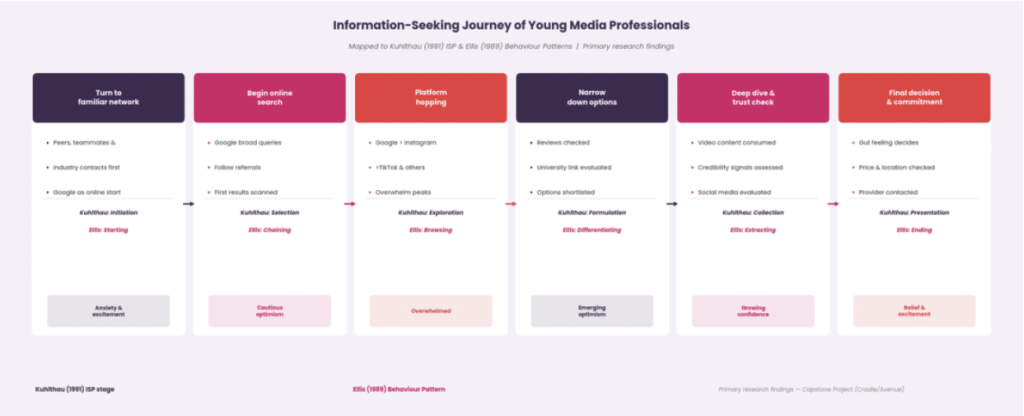
For AVENUE, this means the path to visibility isn’t just about being online. It’s about being findable in the right way, at the right moment, and feeling like somewhere a young professional would actually want to walk into.
A full mapped journey of the information-seeking process can be found in the original research report. Furthermore, all the findings from the research report were also
used to create a communication plan that AVENUE can put to use in order to reach their marketing and communication targets. If you want to know more about the AVENUE project, visit avenuecove.eu.