

Written by Treshi Perera, Dr Mata Haggis-Burridge, Lindsey Bouwels, Silke Hassreiter
While cinema has been around since the late 1800s, the first public and commercial video games emerged only a little over 50 years ago and have since exploded into an industry worth nearly 200 billion euros. People spend more time on video games than other forms of entertainment like listening to music and watching TV or films. But video games are not merely large businesses focused on entertainment, they bring communities together, shape cultural identities, and influence how we interact with the world, and, as such, they have a profound influence on our social and cultural lives. Over 50% of Europeans between 6 and 64 years play video games, making them a key part of our social lives, even if many people working in the culture sector or in government policy haven’t quite realised it yet.
So, video games are important, they matter!
Representation
Representation shapes our social view of the world, for example how we see ourselves, and others. Video games don’t just tell stories, they allow players to experience and shape stories and characters, which sets them apart from other forms of creative media. Experiencing narratives or characters in this way fosters a deep sense of belonging and inclusion, and, because of this, the diversity and accuracy of video game content is important.
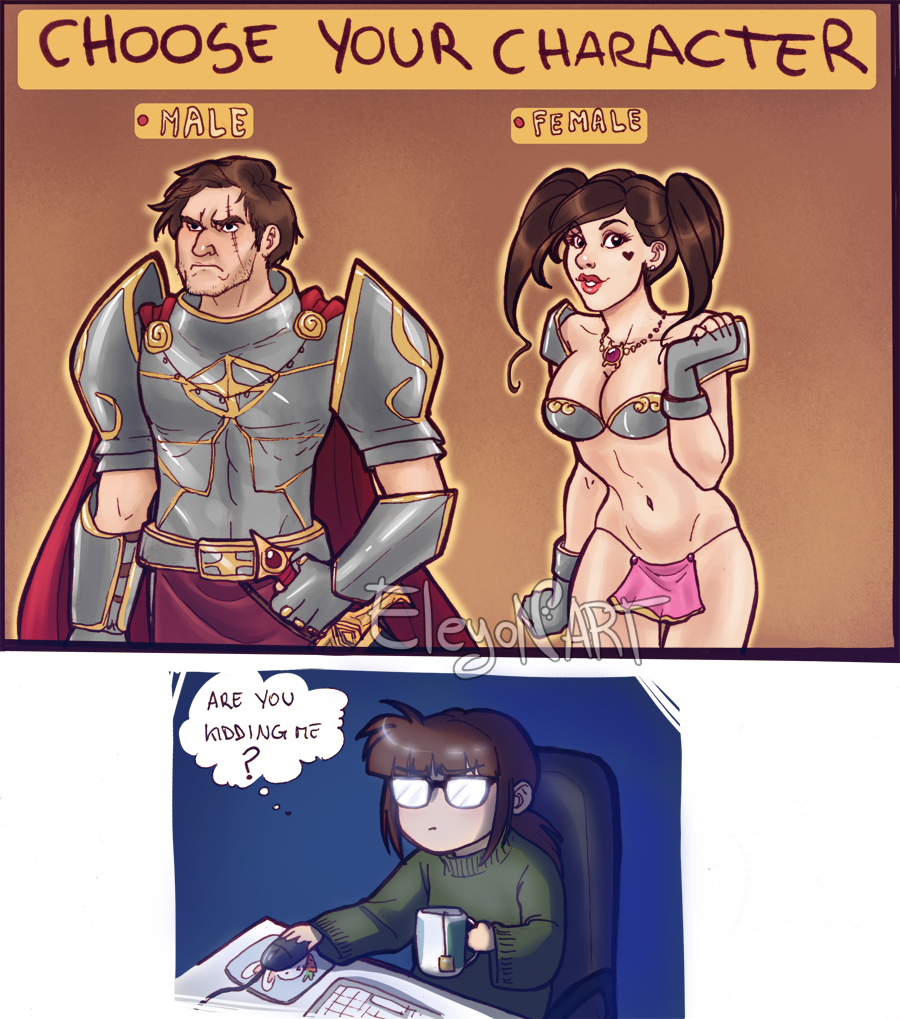
Unfortunately, video games have often fallen short when representing diverse characters and narratives. For example, female characters are often highly sexualized and take subordinate roles in male dominant narratives, minority genders are almost non-existent, and, when Black and ethnic minority characters are present, they can be stereotyped by athletic ability or aggressiveness. Such portrayals foster limited views of the identities and the narratives we are exposed to. As video game audiences continue to grow and diversify, misrepresentations can have significant consequences, as they not only impact player experiences and enthusiasm but also potentially foster exclusionary and hostile environments for some players.
Being a powerful medium, video games have a platform and responsibility to challenge such stereotypes and promote inclusive spaces where all players feel seen and valued. Such thoughtful representation in video games content will not only empower but authentically reflect the richness and diversity of the world we live in, and respect the audiences who buy the games. By critically reflecting on these portrayals, the video games industry can move towards an accurate and inclusive representation of the real-world.
Our Research
Recently, the Creative and Entertainment Games research team at Breda University of Applied Sciences (BUas) examined the representation of masculine, feminine, non-binary, and non-human presenting characters on the covers of 1000 video games published between 2009 and 2019. This study stands out as one of the few studies to date to account for non-binary representation in video game content.
We observed an increase in feminine representation over the 11 years, yet masculine characters remained dominantly represented in video game covers. Non-binary characters showed little change over this period, with frequencies comparable to non-human characters. Additionally, because we encoded all human-presenting characters with unclear gender traits as non-binary, the true number of non-binary characters is likely lower than reported in our data. The sad outcome is that it’s quite likely that talking dinosaurs get similar or more representation in games than non-binary humans. The industry should therefore serve their player community better, through reinforcing inclusion and representation.
Masculine characters were frequently also the sole character on covers, and when in group settings (e.g., when there were three characters on a cover) were far more likely to be prominently featured in the foreground than the background (see Figure 1). Conversely, it was far more likely for a single feminine character to be present in group settings (rather than several feminine characters), highlighting a tokenistic approach towards feminine inclusion. Therefore, while increasing feminine representation reflects progress, inclusion alone is not enough. These findings highlight the importance of also considering how characters are represented, which is currently far from equal.
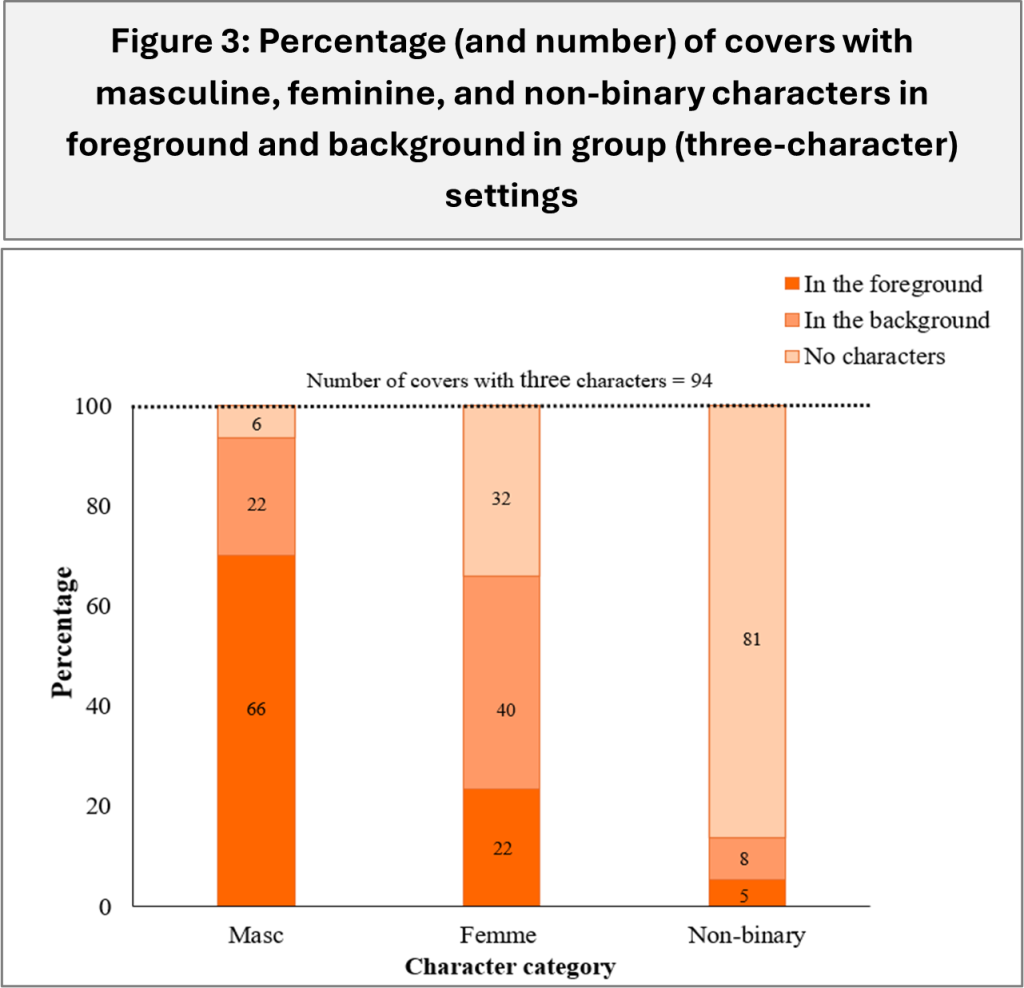
Even more concerning was that the imbalanced masculine representation persisted across games regardless of their age ratings. This normalises the exposure of younger audiences to a skewed patriarchal worldview, where men are presented as the ‘default’ or natural choice for a lead character. Representation in video games is therefore not just about the mere inclusion of characters, but also the authentic and equitable portrayal of these characters.
The video games industry should ensure the worlds they develop thoughtfully represent their diverse players, allowing everyone to feel welcome.